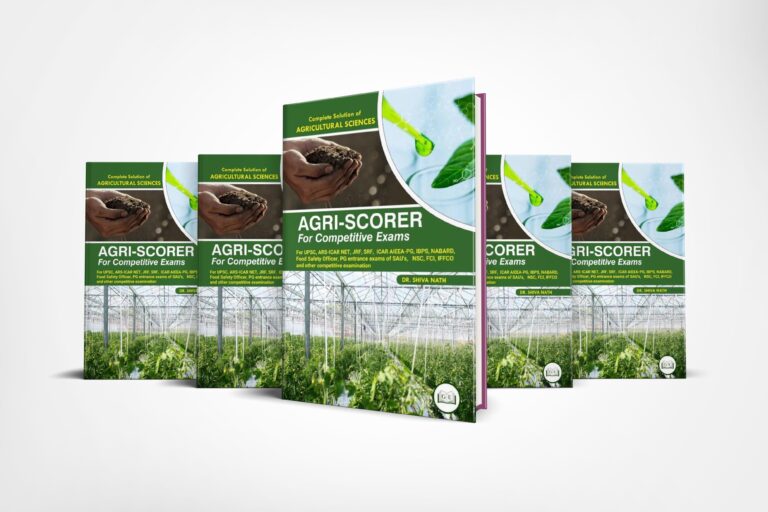
Many agriculture graduates prepare for national entrance examinations for postgraduate admission and research fellowships. This is a general guide; always check the latest official notification for the exam pattern, syllabus and dates.
1. Read the official syllabus first
The testing agency publishes the syllabus and pattern. Print it and tick off topics as you finish them.
2. Build strong basics
Revise your B.Sc. textbooks in core areas such as agronomy, soil science, genetics and plant breeding, horticulture, plant protection and agricultural economics. Most questions test clear fundamentals.
3. Make a weekly plan
Divide subjects across the week, keeping one day for revision and one for a mock test. Give more time to weaker subjects.
4. Make short notes
Write formulas, classifications, scientific names and key facts on one-page summaries for quick revision.
5. Practise previous papers
Solving previous years’ papers shows the question style and the topics asked often. Analyse your mistakes, not only your score.
6. Stay current
Keep up with new varieties, government schemes and developments in agriculture.
7. Look after yourself
Sleep, regular breaks and a steady routine matter more than long, tiring study hours.
Standard textbooks and reference books for these subjects can be found among the books published by Gyanavi Publishers.
Explore and publish with Gyanavi Publishers
Browse the books published by Gyanavi Publishers or visit our online shop to buy books for study, teaching and research. Authors who want to publish can write to [email protected] with a title, subject and short summary. Selected manuscripts may be considered under mutually agreed terms, and author-funded publishing support is also available. Publication is subject to review and is never guaranteed.