
-10%

Students Notes For Veterinary Reproductive Physiology
Original price was: ₹595.00.₹535.50Current price is: ₹535.50. WhatsApp Buy
2 in stock (can be backordered)
Related products
-16%
Rejuvenation of Apple Orchards and High Density Planting in Kashmir
Year of Publication 2023
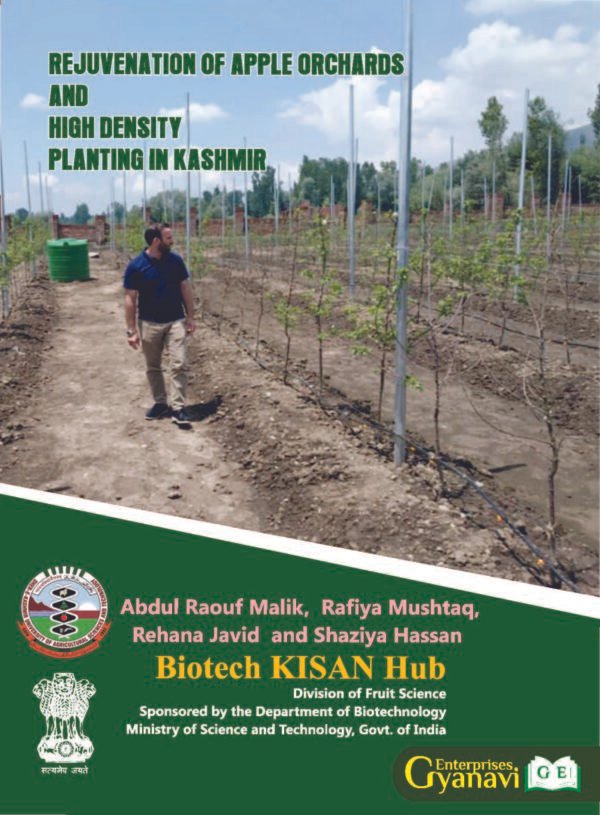
Biotech KISAN Hub project being implemented by Division of fruit Science SKUAST-K with financial and technical support from the Department of Biotechnology, Ministry of Science & Technology, Govt. of has been instrumental in increasing in HDAP units in Kashmir from mere 90 to more than 500 covering an area of around 200 ha and rejuvenation units from almost nil to a more than 100 in a short span of 2 years. The apprehensions which were among the farming community have been addressed through regular training and demonstrations carried out by the Biotech KISAN hub for both rejuvenation and HDAP. The farmers in the south Kashmir districts have adopted the HDAP and rejuvenation technology at a faster pace and are currently leading and setting up the trend for all other districts of the valley. The average yield ofHDAP apple and the varieties introduced by Biotech KISAN hub will be around 40-60 t/ha compared to just 11 t/ha from traditional apple trees. The technology has simultaneously been transferred to state departments as well as KVKs. The impact of project activities has been significant in changing the attitude of the state govt. also and is planning to take it as a scheme vigorously. The awareness about both rejuvenation and HDAP was meager in northern districts of the valley and the Biotech KISAN hub team has introduced the first HDAP Units in said districts along with rejuvenation units. It is now expected that the farmers shall adopt HDAP and rejuvenation technology in the future with ease. The state government has decided to take it in mission mode. The HDAP and rejuvenation of apple orchards with new mutant is the future of apple orcharding system in valley and must be adopted in other apple growing regions of India as well.
-16%
Rejuvenation of Apple Orchards and High Density Planting in Kashmir
Biotech KISAN Hub project being implemented by Division of fruit Science SKUAST-K with financial and technical support from the Department of Biotechnology, Ministry of Science & Technology, Govt. of has been instrumental in increasing in HDAP units in Kashmir from mere 90 to more than 500 covering an area of around 200 ha and rejuvenation units from almost nil to a more than 100 in a short span of 2 years. The apprehensions which were among the farming community have been addressed through regular training and demonstrations carried out by the Biotech KISAN hub for both rejuvenation and HDAP. The farmers in the south Kashmir districts have adopted the HDAP and rejuvenation technology at a faster pace and are currently leading and setting up the trend for all other districts of the valley. The average yield ofHDAP apple and the varieties introduced by Biotech KISAN hub will be around 40-60 t/ha compared to just 11 t/ha from traditional apple trees. The technology has simultaneously been transferred to state departments as well as KVKs. The impact of project activities has been significant in changing the attitude of the state govt. also and is planning to take it as a scheme vigorously. The awareness about both rejuvenation and HDAP was meager in northern districts of the valley and the Biotech KISAN hub team has introduced the first HDAP Units in said districts along with rejuvenation units. It is now expected that the farmers shall adopt HDAP and rejuvenation technology in the future with ease. The state government has decided to take it in mission mode. The HDAP and rejuvenation of apple orchards with new mutant is the future of apple orcharding system in valley and must be adopted in other apple growing regions of India as well.
-25%

AGRI-SCORER: For Competitive Exams
Year of Publication 2022
Agri-scorer compiled is based on the syllabus of different competitive exams in Agriculture and Allied subjects. This book comprises 17 chapters namely agricultural meteorology, agronomy, soil science and agricultural chemistry, genetics and plant breeding, agricultural biochemistry, agricultural biotechnology, fruit science, vegetable science, agro-forestry and forestry, plant physiology, agricultural microbiology, environmental sciences, plant pathology, agricultural entomology, agricultural economics, agricultural extension, animal husbandry and dairy sciences. Multiple choice questions given at each chapters are extremely valuable for preparation of competitive exams like Union and State Public Service Commissions, Agricultural Research Services – National Eligibility Test (ARS – NET), JRF, SRF, ICAR NET , ARS,NTA ICAR AIEEA-PG Institute of Banking Personnel Services (IBPS), NABARD, Food Safety Officer, PG entrance exams of State Agricultural Universities (SAU’s), All India Entrance Examinations for UG and PG admissions to agriculture, National Seeds Corporations (NSC), Food Corporation of India (FCI), Central Warehousing Corporation (CWC), Indian Farmers Fertilizer Cooperative Limited (IFFCO) and other competitive examination related to the subject.
-25%
AGRI-SCORER: For Competitive Exams
Agri-scorer compiled is based on the syllabus of different competitive exams in Agriculture and Allied subjects. This book comprises 17 chapters namely agricultural meteorology, agronomy, soil science and agricultural chemistry, genetics and plant breeding, agricultural biochemistry, agricultural biotechnology, fruit science, vegetable science, agro-forestry and forestry, plant physiology, agricultural microbiology, environmental sciences, plant pathology, agricultural entomology, agricultural economics, agricultural extension, animal husbandry and dairy sciences. Multiple choice questions given at each chapters are extremely valuable for preparation of competitive exams like Union and State Public Service Commissions, Agricultural Research Services – National Eligibility Test (ARS – NET), JRF, SRF, ICAR NET , ARS,NTA ICAR AIEEA-PG Institute of Banking Personnel Services (IBPS), NABARD, Food Safety Officer, PG entrance exams of State Agricultural Universities (SAU’s), All India Entrance Examinations for UG and PG admissions to agriculture, National Seeds Corporations (NSC), Food Corporation of India (FCI), Central Warehousing Corporation (CWC), Indian Farmers Fertilizer Cooperative Limited (IFFCO) and other competitive examination related to the subject.
-21%
Soil Testing and Soil Microbiology
Soil testing informs the farmers of the imbalances in the soil and guides them in adopting specific fertilizers or soil conditioners to deal with the diagnosed issues. These tests can equip us in taking preventive and corrective measures even before sowing the crop, and that results in an un-compromised final yield. Thus, it is evident that the testing of agricultural soil is pertinent in India. The book contains 14 chapters covering all aspects of soil testing and soil microbiology, which include introduction, sanitation safety guidelines of the lab, physical properties of soil analysis, chemical properties of soil analysis, water sample analysis, prepare soil and water health card, manures and fertilizers: nutrient contents and their identification, organic farming, good lab practices, introduction to soil microbiology, soil microbiology and biogeochemical cycle, soil microbiology and biodegradation and biogeneration, effect of pesticides and other chemicals on the soil, microbiology of the soil and its analysis. It is hoped that this book will be useful for scientists, teachers, students and lab-technicians associated with soil and plant analysis.
-21%
Soil Testing and Soil Microbiology
Soil testing informs the farmers of the imbalances in the soil and guides them in adopting specific fertilizers or soil conditioners to deal with the diagnosed issues. These tests can equip us in taking preventive and corrective measures even before sowing the crop, and that results in an un-compromised final yield. Thus, it is evident that the testing of agricultural soil is pertinent in India. The book contains 14 chapters covering all aspects of soil testing and soil microbiology, which include introduction, sanitation safety guidelines of the lab, physical properties of soil analysis, chemical properties of soil analysis, water sample analysis, prepare soil and water health card, manures and fertilizers: nutrient contents and their identification, organic farming, good lab practices, introduction to soil microbiology, soil microbiology and biogeochemical cycle, soil microbiology and biodegradation and biogeneration, effect of pesticides and other chemicals on the soil, microbiology of the soil and its analysis. It is hoped that this book will be useful for scientists, teachers, students and lab-technicians associated with soil and plant analysis.
Reviews
There are no reviews yet.